
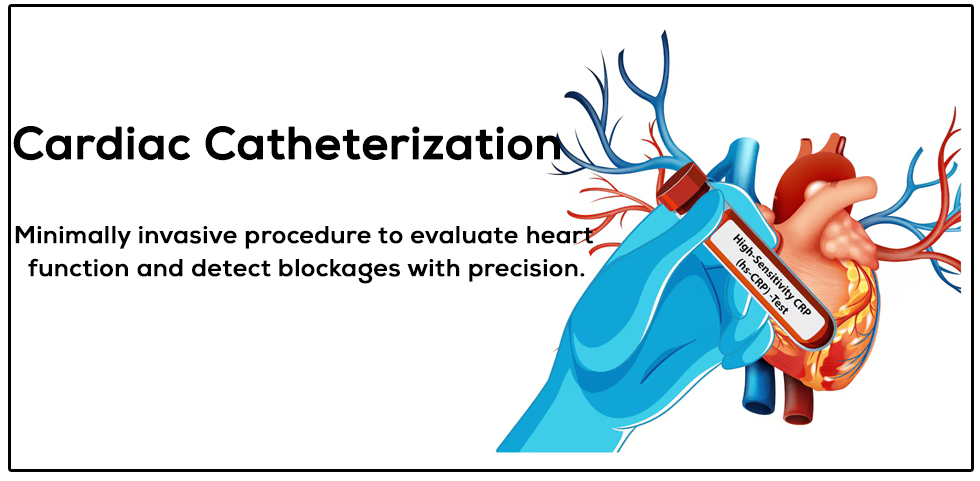
Cardiac Catheterization
Cardiac Catheterization is a minimally invasive diagnostic and interventional procedure used to evaluate the function of the heart and detect blockages or abnormalities in the coronary arteries, heart valves, and chambers. It plays a crucial role in diagnosing and guiding the treatment of various heart conditions.
During the procedure, a thin, flexible tube called a catheter is inserted through a blood vessel (usually from the wrist or groin) and carefully guided to the heart. Using advanced imaging and contrast dye, doctors can assess blood flow, measure pressure inside the heart, and identify any narrowing or blockages in the arteries.
Cardiac catheterization is often the first step before procedures like angioplasty, stenting, or valve interventions, making it essential for accurate diagnosis and effective treatment planning.
When is Cardiac Catheterization Recommended?
- Chest pain or suspected coronary artery disease
- Abnormal ECG, TMT, or Echo reports
- Shortness of breath or unexplained fatigue
- Evaluation after heart attack
- Assessment before heart surgery or interventions
Benefits of Cardiac Catheterization
- Accurate and detailed heart evaluation
- Minimally invasive with low risk
- Helps plan appropriate treatment strategy
- Quick procedure with fast recovery
- Provides real-time diagnostic information
What Does It Help Diagnose?
- Coronary artery blockages
- Heart valve disorders
- Congenital heart defects
- Heart muscle function abnormalities
- Pressure changes within heart chambers
Why Choose Dr. Sujeet Narain for Cardiac Catheterization?
- Extensive experience in interventional cardiology
- Expertise in complex diagnostic and interventional procedures
- Advanced technology and modern cath lab facilities
- High standards of safety and patient care
- Accurate diagnosis with personalized treatment planning